The practical hardware every pedalboard build relies on
Pedals Get The Attention
But the reliability of any board comes down to two fundamentals: how securely everything is mounted, and how cleanly everything is wired. When those two factors are handled properly, boards are quieter, sturdier, and easier to service.
RockBoard’s mounting and cable-management solutions address exactly that. They are affordable, easy to explain, and they solve visible problems immediately.
Pedal Affixing Solutions
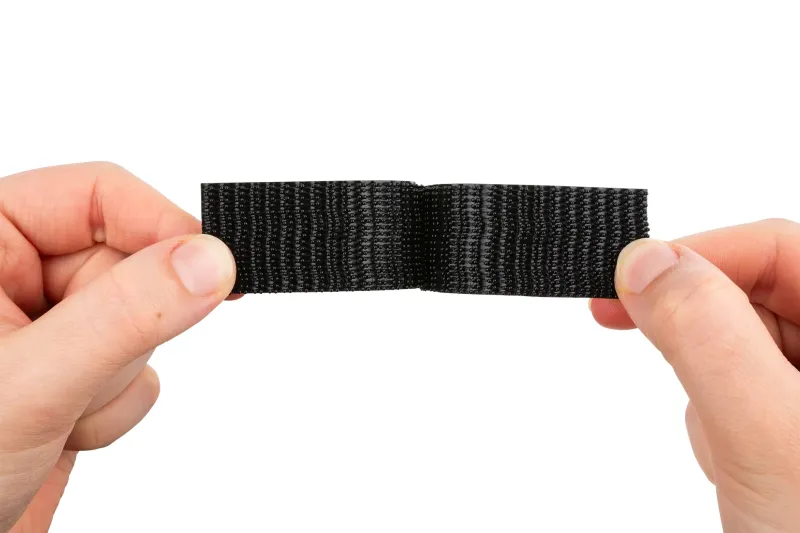
RockBoard Pedalboard Tape
When standard hook and loop is not enough, this is the answer. RockBoard Pedalboard Tape uses 3M Dual Lock technology, combining a very strong adhesive backing with an interlocking fastening system that delivers a significantly stronger hold than conventional solutions. It’s ideal for mounting heavier components, such as power supplies, underneath a pedalboard. A small amount goes a long way, which makes it efficient. When a player wants something locked down firmly, this is the only answer; we use it on all our board builds.
RockBoard Hook & Loop Tape
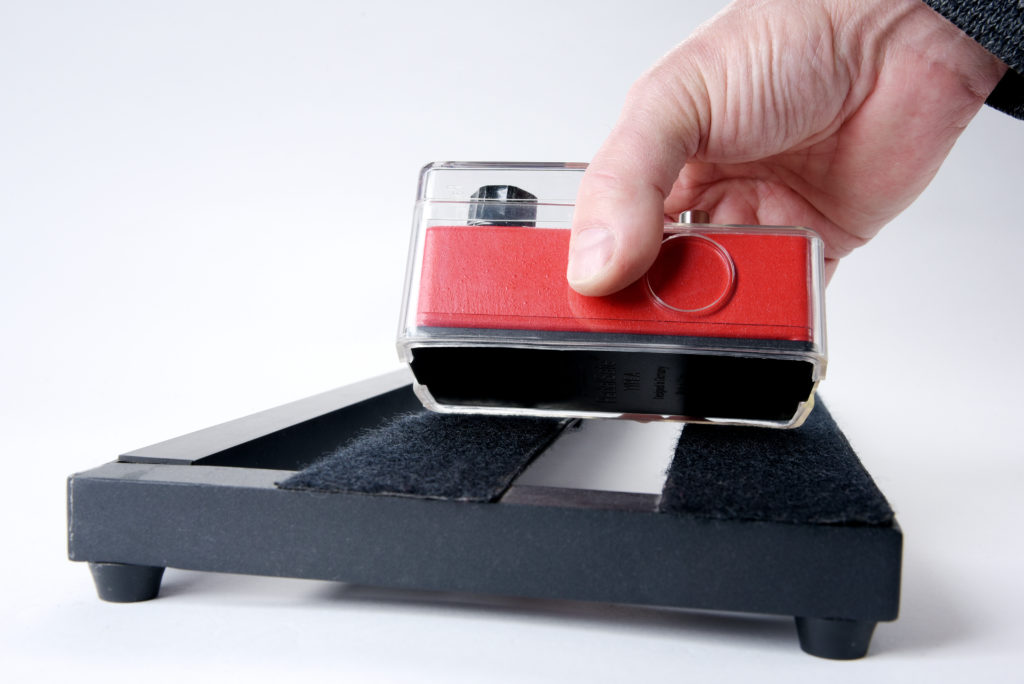
Hook & Loop tape remains the universal mounting method. It is simple, familiar, and effective. RockBoards include it as standard, but guitarists constantly add new pedals, swap layouts, and totally rebuild boards. That provides a continual demand for more. Hook & Loop tape is the straightforward, simple choice.
Pedal Mounting: Which One, and Why?
Dual Lock and Hook & Loop serve different levels of builds.
Dual Lock is about maximum self-assurance. It is the right choice for heavier or more expensive gear, and ideal for mounting PSUs underneath a board where gravity is working against you. Once fitted, it holds firmly and inspires confidence. The premium choice.
Hook and loop, by contrast, is about getting the job done with what you have. Most pedalboards already have the bottom layer fixed to the board already. It allows pedals to be repositioned easily and supports regular layout changes. It is not designed for heavy under-board mounting, but for everyday pedal placement, and placing smaller PSUs under-board, it remains practical and effective.
This is not a question of one replacing the other. If you are building something permanent and robust, then Dual Lock is your best friend. If you are adding another pedal to an ever-changing board, hook and loop is the natural solution.
Whichever road you choose, this will be how that board stays forever, until the next pedal of course.
Cable Tidy Solutions
Messy cabling almost always leads to a noisy board. Power and signal cables running together will create avoidable interference. RockBoard’s cable management range gives you simple, practical tools to address that from the start or correct it later. Also, it looks a hell of a lot better, and prevents issues from cable movement.
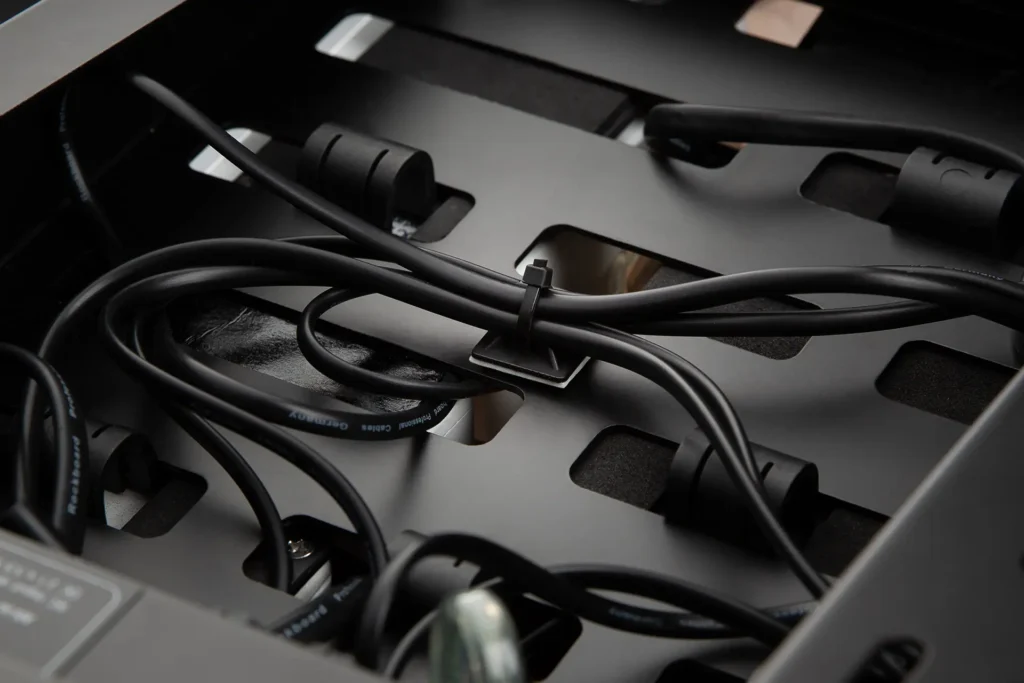
RockBoard Board Organiser The Board Organiser cable tie anchors allow cables to be secured neatly beneath the board, creating defined routing paths. This makes it easier to separate power cables from signal cables and reduce the risk of interference caused by disorganised wiring. It is particularly suited to players who plan to keep their layout consistent long term. Once installed, the routing is structured and quiet.
RockBoard MagneTies
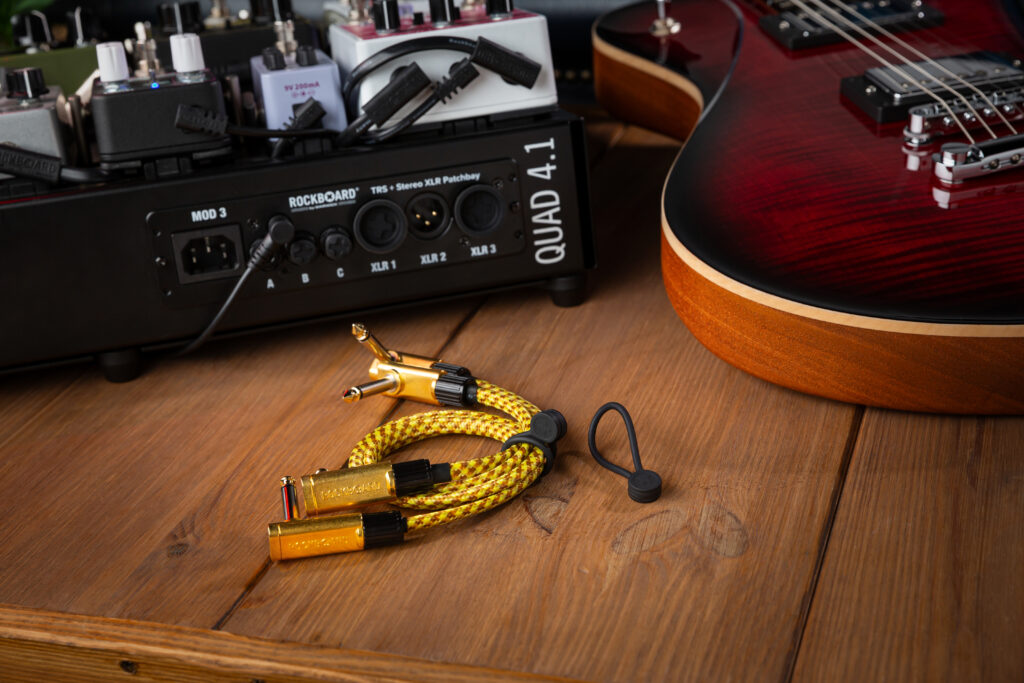
RockBoard MagneTies bring flexibility into cable management. With strong magnetic attachment, they can secure to many areas on RockBoard and other boards, holding cables firmly while remaining easy to reposition.
They are stretchy, reusable, and because of this, they’re environmentally friendly. Importantly, based on extensive testing, the magnets do not cause signal interference.
Available in 10 cm and 15 cm lengths, in packs of 10 or 20 pieces, they also extend beyond pedalboards into general cable organisation, wherever cables are used.
The computer cables at RockBoard are very neat, thanks in part to the MagneTies.
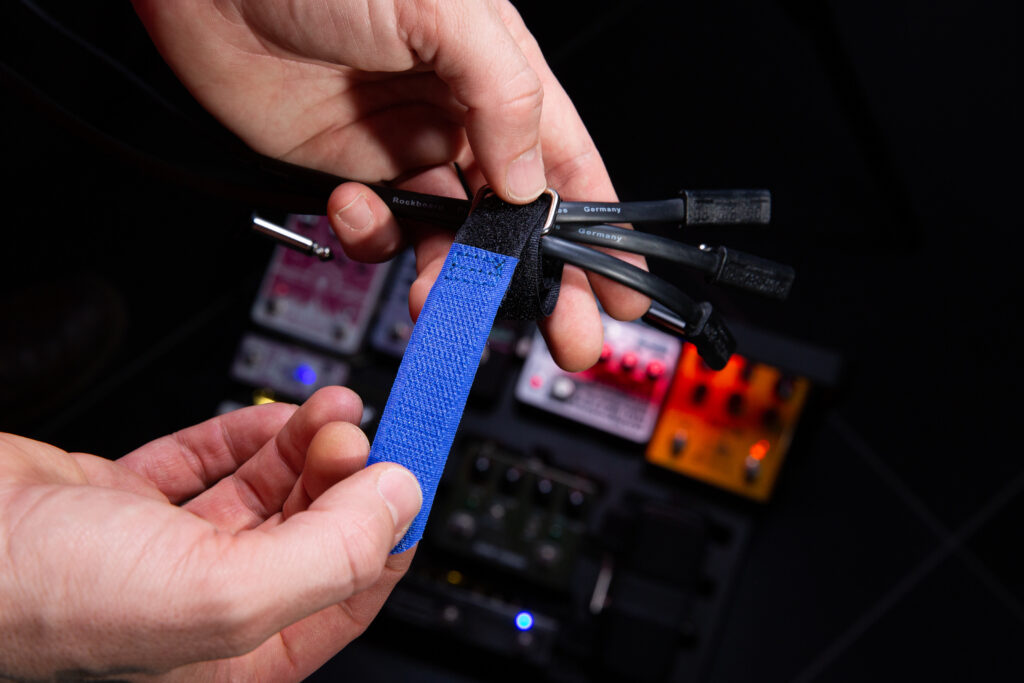
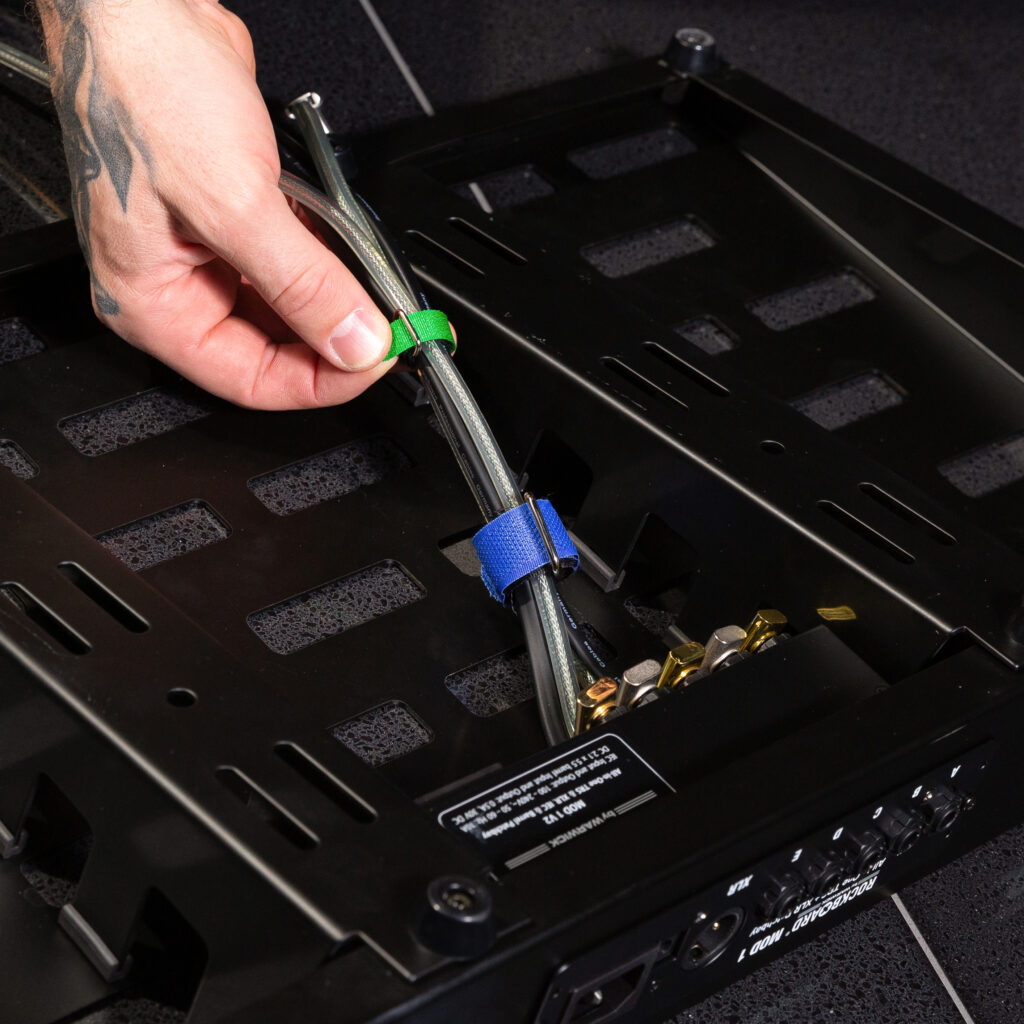
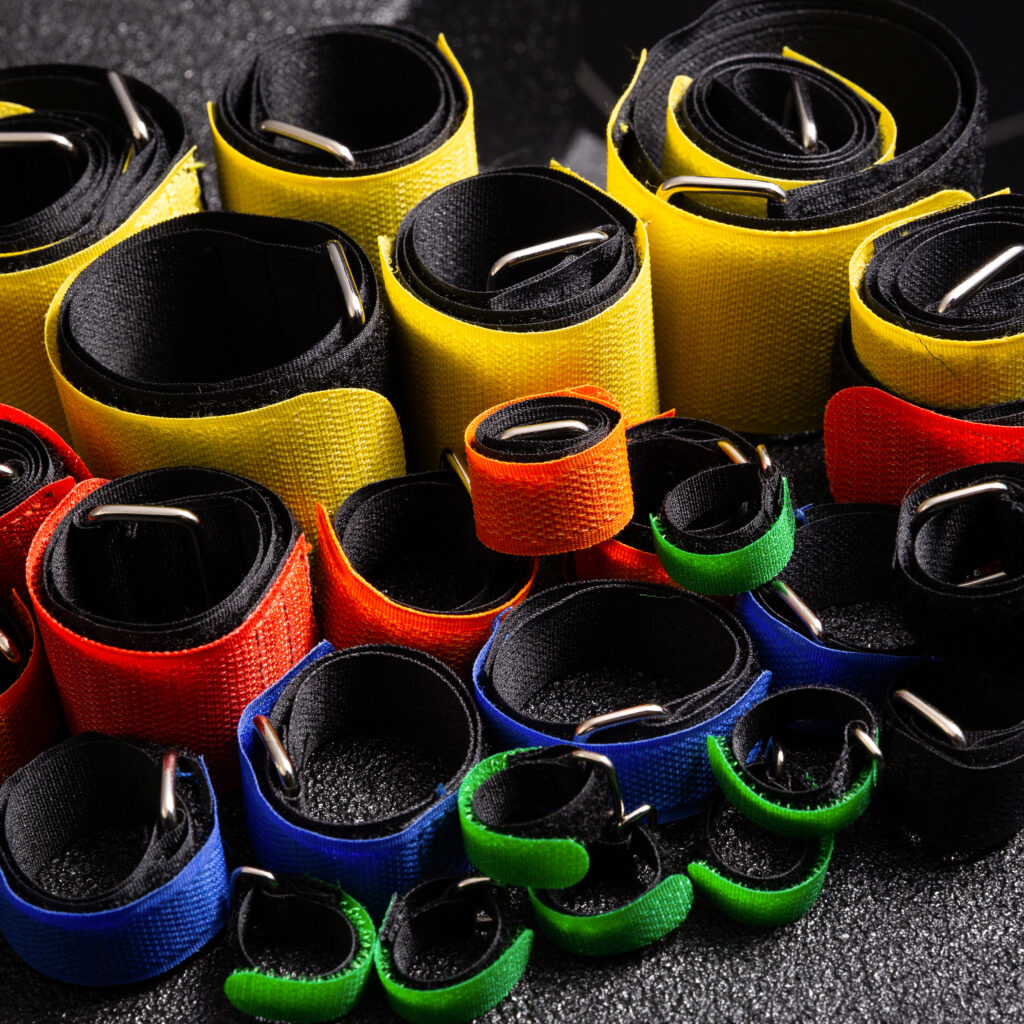
RockBoard Hook and Loop Cable Ties Hook and loop cable ties offer a simple and cost-effective approach to cable organisation. They are reusable, familiar, available in five sizes from extra-small to extra-large, and come in six colours for easy cable identification. They bundle cables quickly and cleanly, making them ideal for general organisation both on and off the board.
Cable Management: Which One, and Why?
The Board Organiser, used with cable ties, is about structure.
It creates fixed routing paths under the board and supports deliberate separation of power and signal cables. For players building a long-term, dialled-in setup, it provides order and consistency.
MagneTies focus on flexibility.
They attach securely but can be moved easily, making them ideal for players who refine their boards regularly. They also carry the added benefit of reuse and broader application beyond pedalboards.
Hook and loop cable ties sit at the accessible end of the spectrum.
They are simple, reusable, colour-coded, and affordable. They do not anchor to the board itself, but they bundle cables quickly and effectively.
The conversation becomes practical.
Permanent build = Cable ties and anchors, and a small pack of MagneTies for Expression/Wah pedal, cables.
Frequently changing layout = MagneTies, neat, look great, simple.
Simple tidy-up or colour coding = Hook and loop cable ties do the job.
Why RockBoard?
We understand that variations of all these products are available in many places. But RockBoard has tested these specific versions to ensure they are of a suitable standard for use on pedalboards, and that matters to musicians.
In short, they are working tools for working players.